You did the hard part. The weight is gone — or mostly gone — and you’ve fundamentally changed your health. But your body hasn’t quite caught up. The skin that stretched over years doesn’t simply spring back, and for many people, that gap between the body they’ve worked for and the one they’re living in is genuinely frustrating.
This blog won’t tell you the journey was worth it — you already know that. What it will do is give you clear, honest information about what your options actually look like from here.
Why doesn’t skin retract after major weight loss?
Skin is elastic up to a point. But after significant, sustained weight — generally considered 40 kilograms or more, though individual variation matters enormously — the dermis loses much of its ability to contract. Age, genetics, how quickly the weight was lost, and how long it was carried all influence how much natural retraction occurs.
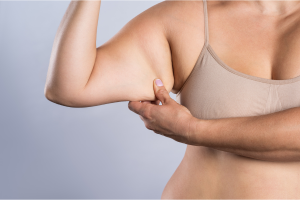
The result is excess skin that hangs, folds, and in many cases causes real clinical problems: persistent rashes, hygiene difficulties, physical discomfort, and limitations on movement and exercise. This is not a cosmetic inconvenience. For many patients, it’s an ongoing medical issue.
How long should I wait before considering surgery?
This is one of the most important questions — and the honest answer is: longer than most people want to hear.
The general clinical guidance is that your weight should be stable for a minimum of 6 months before body contouring surgery is considered. There are good reasons for this:
- Continued weight fluctuation affects surgical outcomes significantly
- Nutritional status needs to be optimised — particularly relevant for patients who have undergone bariatric surgery or taken GLP-1 medications, where absorption of key nutrients can be compromised
- The body needs adequate time to stabilise before it can heal well from major surgery
“I always want to see a patient who is genuinely stable — not just in their weight, but in their overall health and nutrition. Surgery after massive weight loss is more complex than standard body contouring, and preparation matters.” — Dr Matthew Peters
What procedures are typically involved?
There is no single operation for post-weight loss body contouring. The excess skin tends to be distributed across multiple areas, and addressing it usually means thinking in stages rather than a single procedure. Commonly relevant operations include:
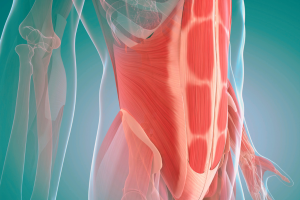
- Abdominoplasty — removal of excess skin and tissue from the abdomen, often combined with repair of separated abdominal muscles (diastasis recti)
- Belt Lipectomy / Circumferential body lift — addresses the full lower trunk including abdomen, flanks, hips, and lower back
- Back bra lift (upper body lift) — removes excess skin and fat from the mid and upper back, including skin folds around the bra line. Particularly relevant for massive weight loss patients, and in some cases, may extend to address excess skin into the underarm area
- Brachioplasty (arm lift) — addresses loose skin on the upper arms
- Breast lift or reduction — often relevant following significant weight loss, which commonly affects breast volume and position
Most patients require more than one procedure, staged over time to allow adequate recovery between operations.
Will any of this be covered by Medicare?
Potentially…. and this is worth discussing specifically with your GP. Where there is a documented clinical basis (such as chronic skin conditions, functional impairment, or muscle separation) certain procedures may attract a Medicare rebate. This is assessed case by case and is not automatic.
A GP referral to a specialist plastic surgeon is the appropriate starting point. Your surgeon can then assess your individual circumstances and provide clarity on what may or may not fall within Medicare rebate pathways.
What does recovery from this kind of surgery realistically look like?
Significant. Post-weight loss body contouring procedures are major operations, often more complex than the equivalent procedure in someone who has not experienced massive weight loss. Skin quality, tissue condition, and nutritional factors all affect both the surgical approach and the recovery.
Patients should expect:
- Several weeks away from work for individual procedures; longer if procedures are combined
- Physical restrictions for an extended period
- Permanent scarring, positioned carefully within natural contour lines and clothing boundaries where possible
- A staged process over months if multiple areas are being addressed
“These are not quick procedures, and they are not quick recoveries. My patients who do best are the ones who understand that going in and who have support around them during the process.” — Dr Matthew Peters
Where do I start?
With your GP. Describe your symptoms clearly — the rashes, the physical limitations, the skin conditions that haven’t resolved — and ask for a referral to a specialist plastic surgeon. You don’t need to arrive with a procedure list. You need to describe what your body is doing and how it’s affecting your life.
From there, a thorough consultation with a specialist will give you a realistic picture of what’s involved, what’s appropriate for your circumstances, and what the pathway forward looks like.
Ready to have that conversation?
Dr Matthew Peters is a Fellow of the Royal Australasian College of Surgeons (FRACS) with specialist registration in plastic and reconstructive surgery. If you have a GP referral and would like to discuss your options, contact us to arrange a consultation.
Note: Individual results will vary according to several factors, including genetics, age, diet & exercise. All surgeries carry risk & require an appropriate recovery period & aftercare regime which may include wearing compression garments or modifying your lifestyle post-operatively. You should seek a second opinion from a Specialist Surgeon before proceeding. More information about these risks and aftercare can be easily found on our website here